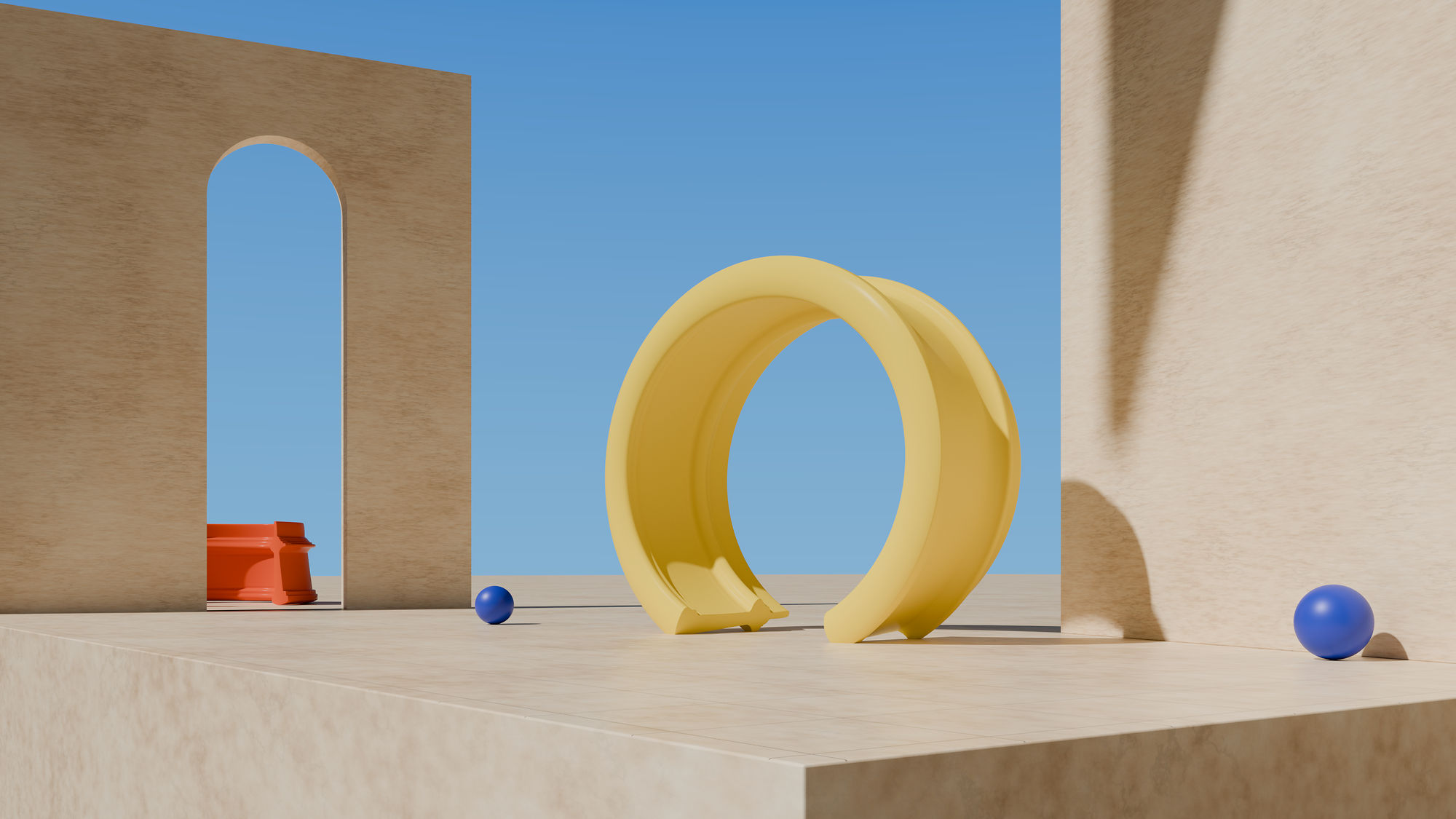
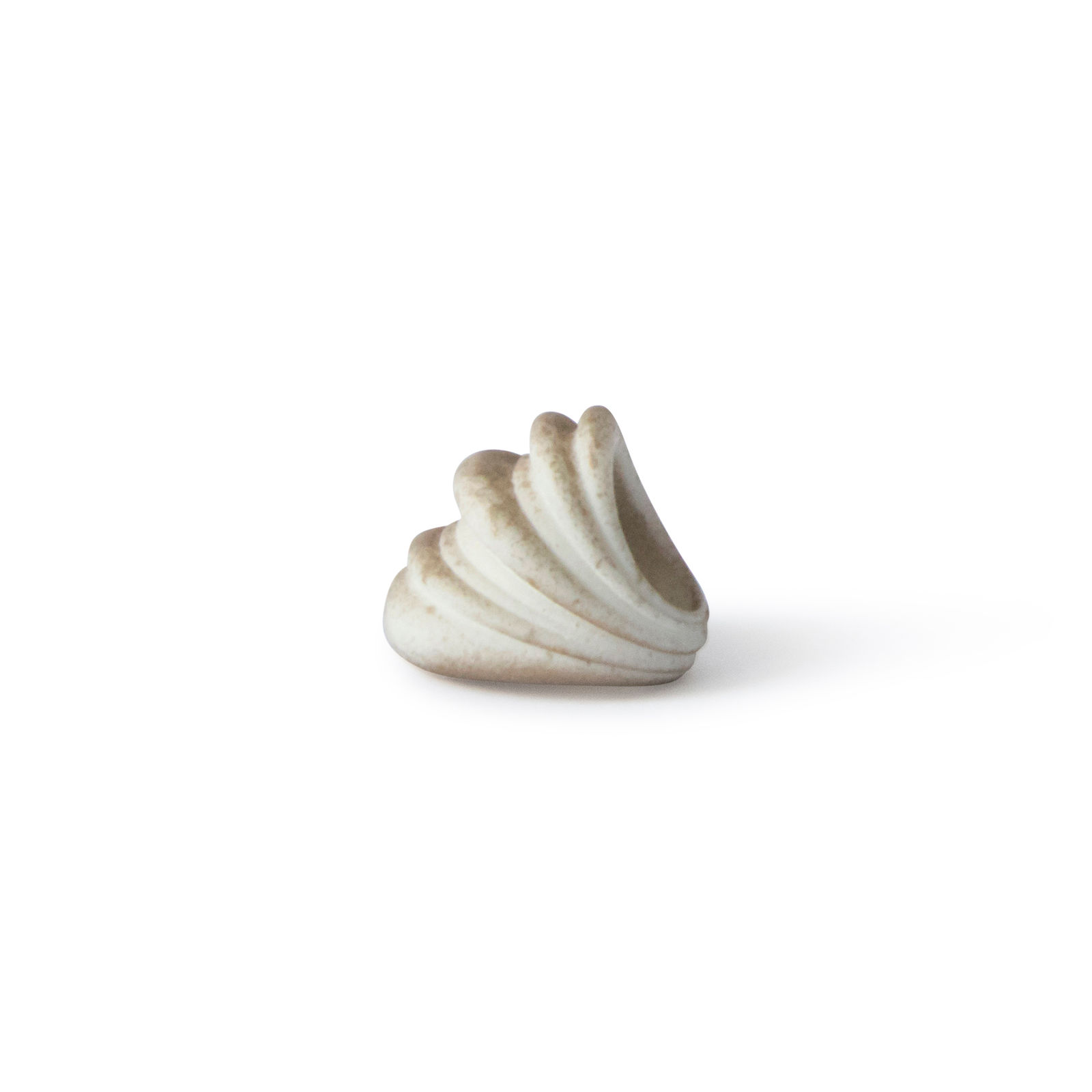
3D rendering for jewelry
I model the piece and build the image around it. The jewel is never generated. Everything around it can be.
I have been modelling in 3D since 2014 and producing physical jewelry since 2017. I know what a render gets wrong because I have held the object it was supposed to be, and seen the difference.
Jewelry mostly. Also art objects, small design objects, ceramics, glass. Anything small where the surface is the value.
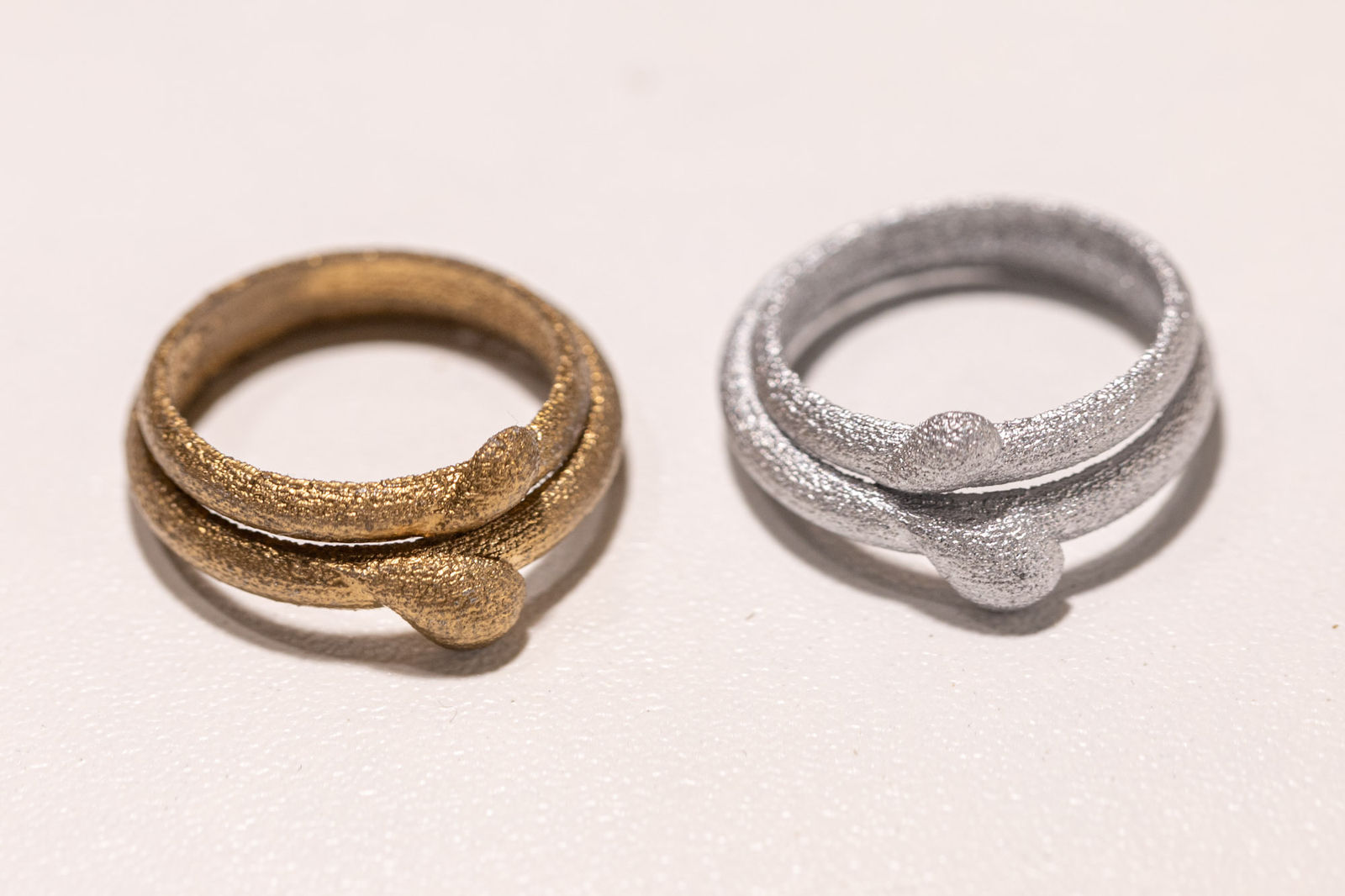
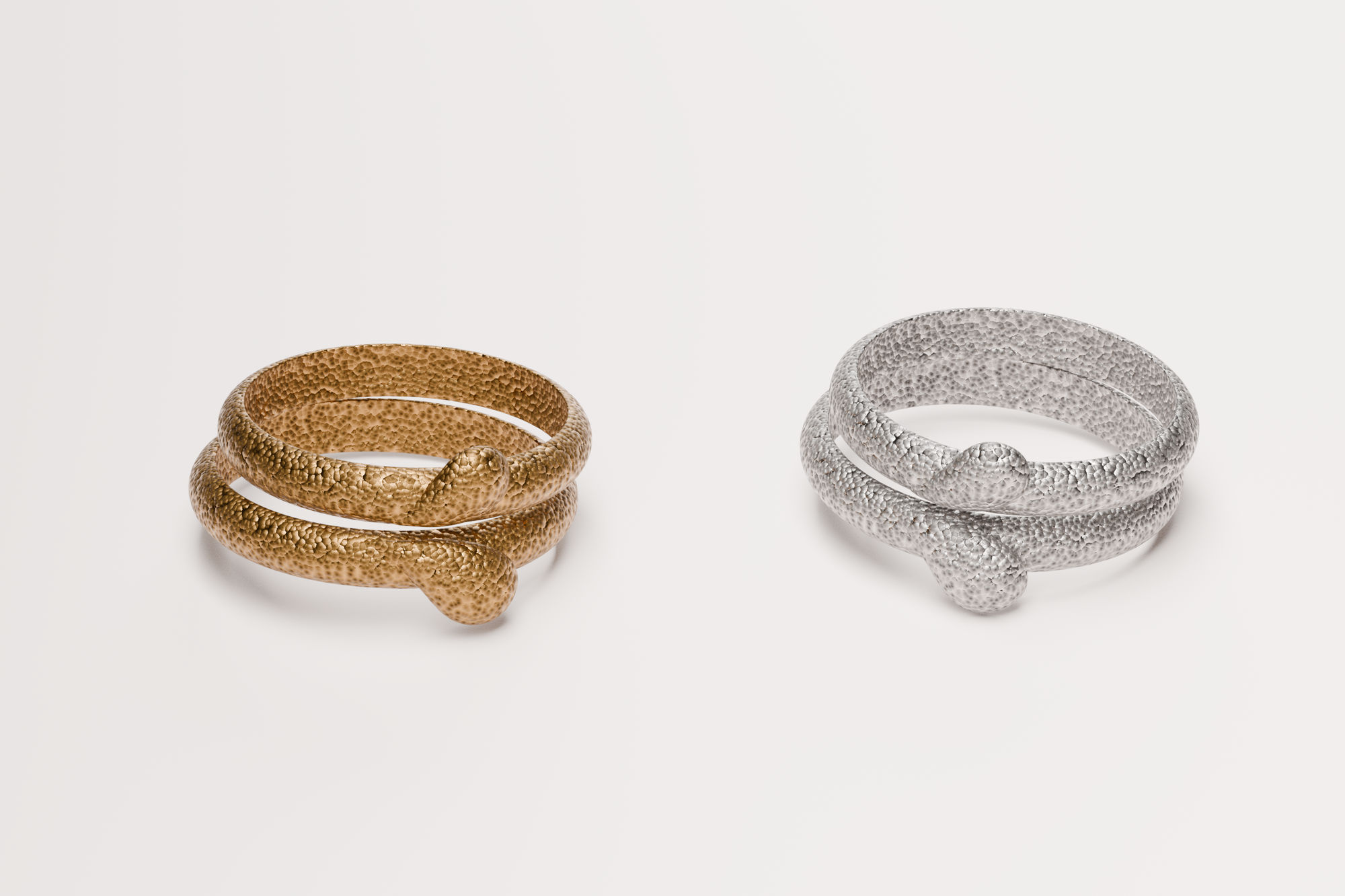
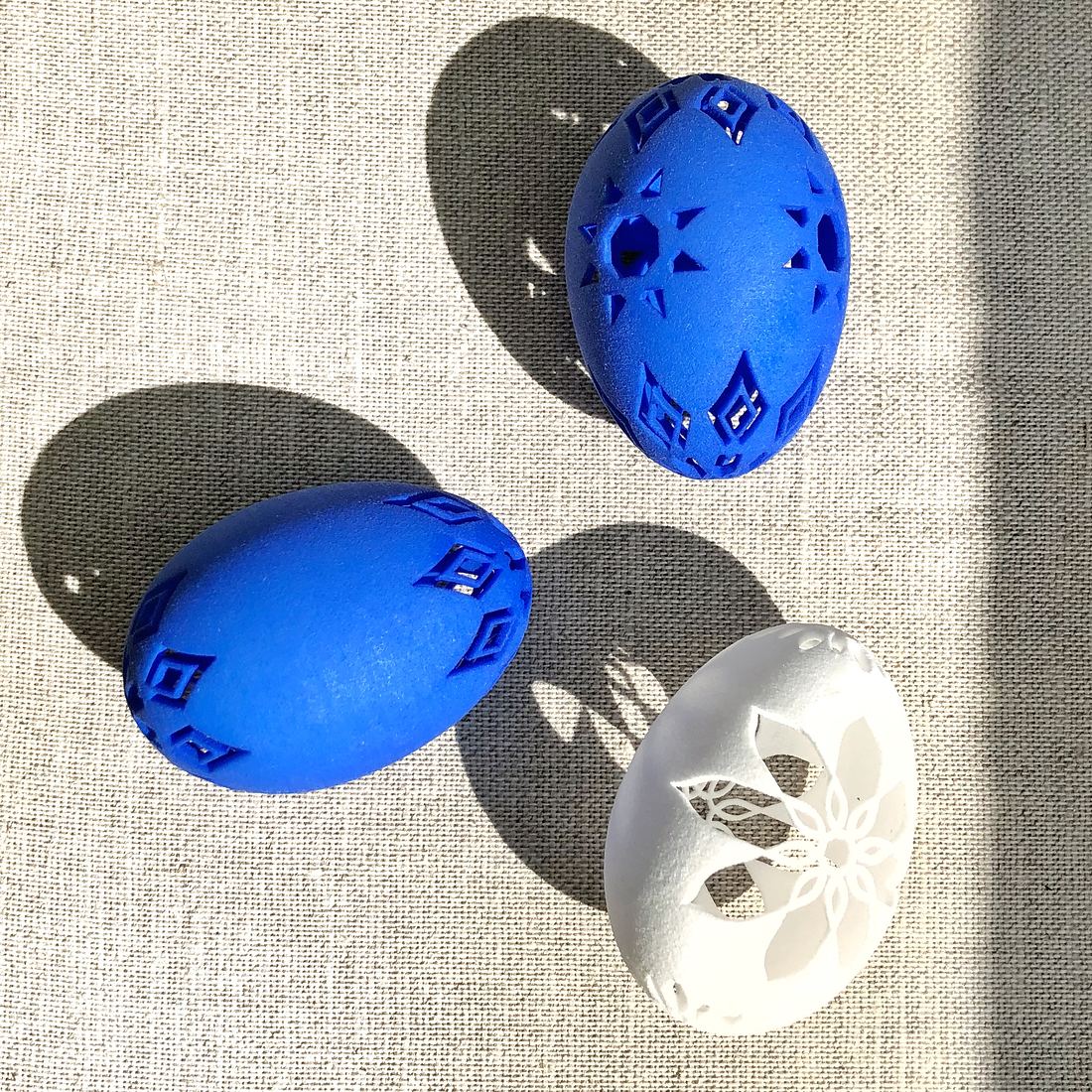
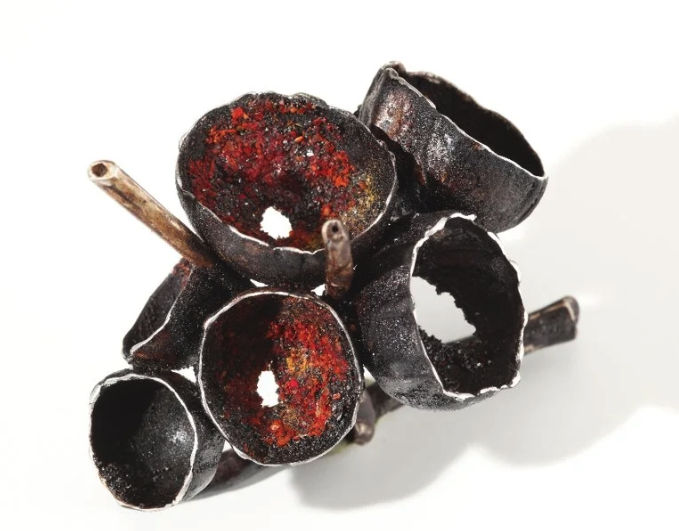
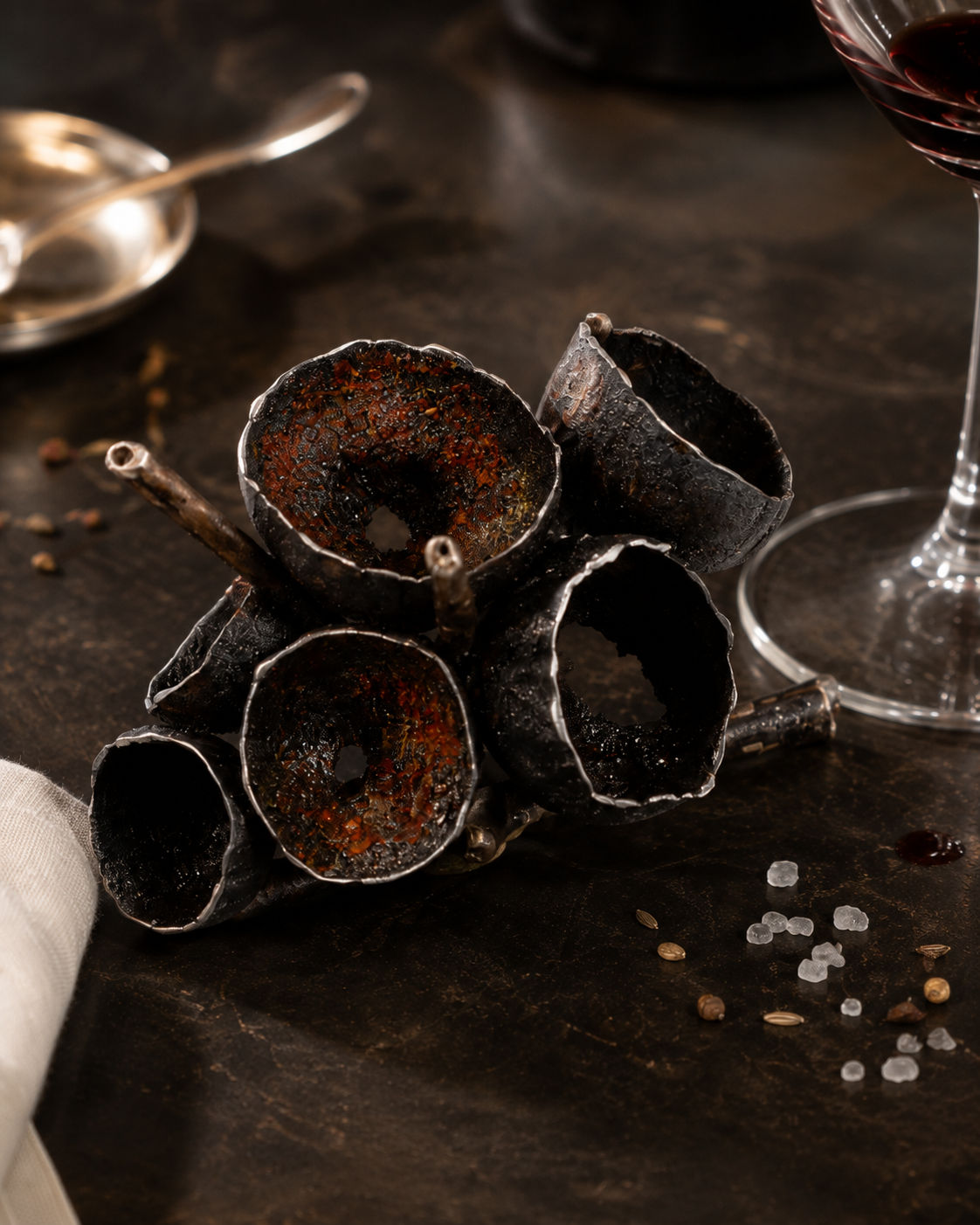
Same object, twice.
One is a photograph. One is a render of the same file. The lighting was measured and rebuilt rather than approximated.
Metallized flake on cast nylon. The photograph has dust removed and the background evened. Nothing else was changed.
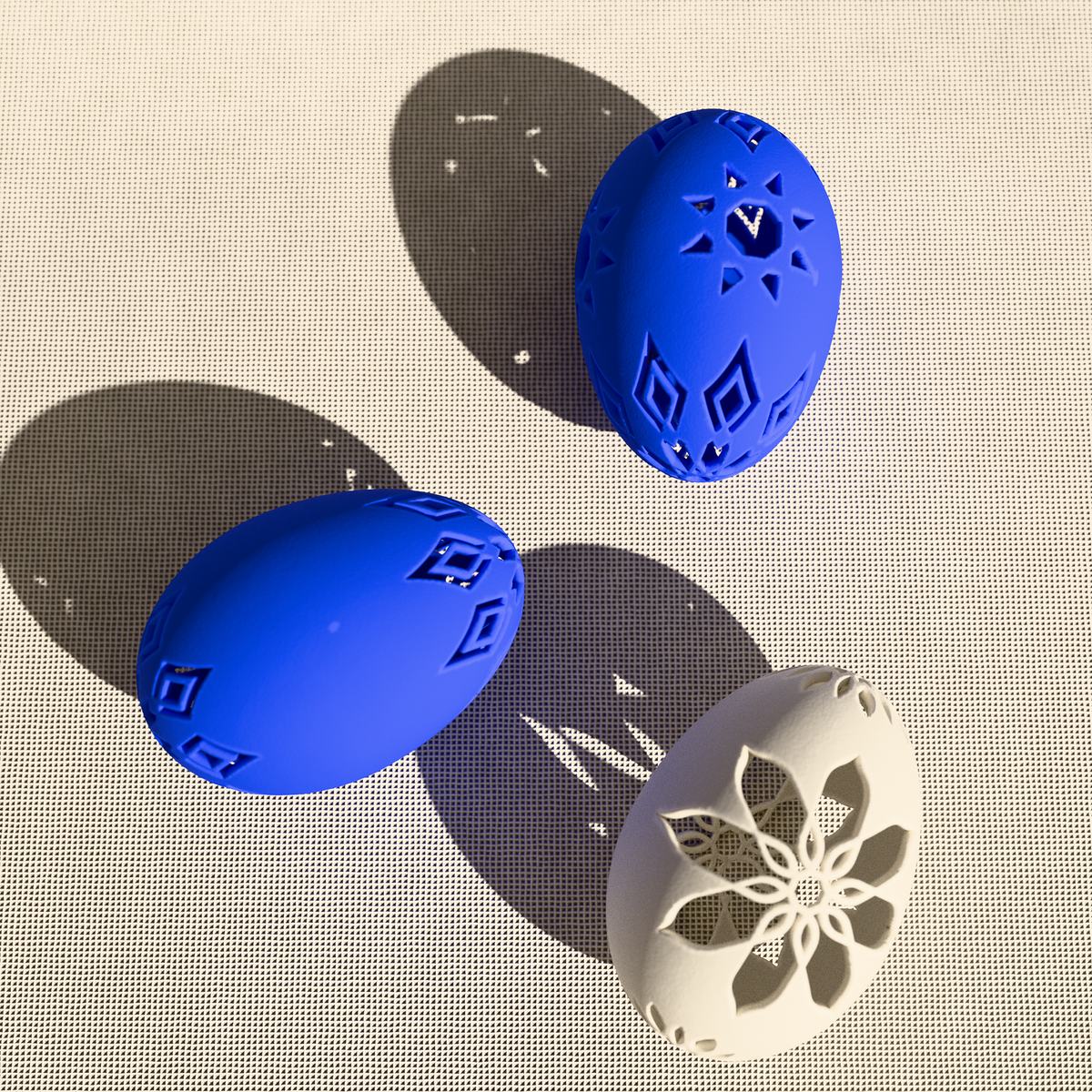
Sintered nylon. Direct sun, linen, real shadow length.
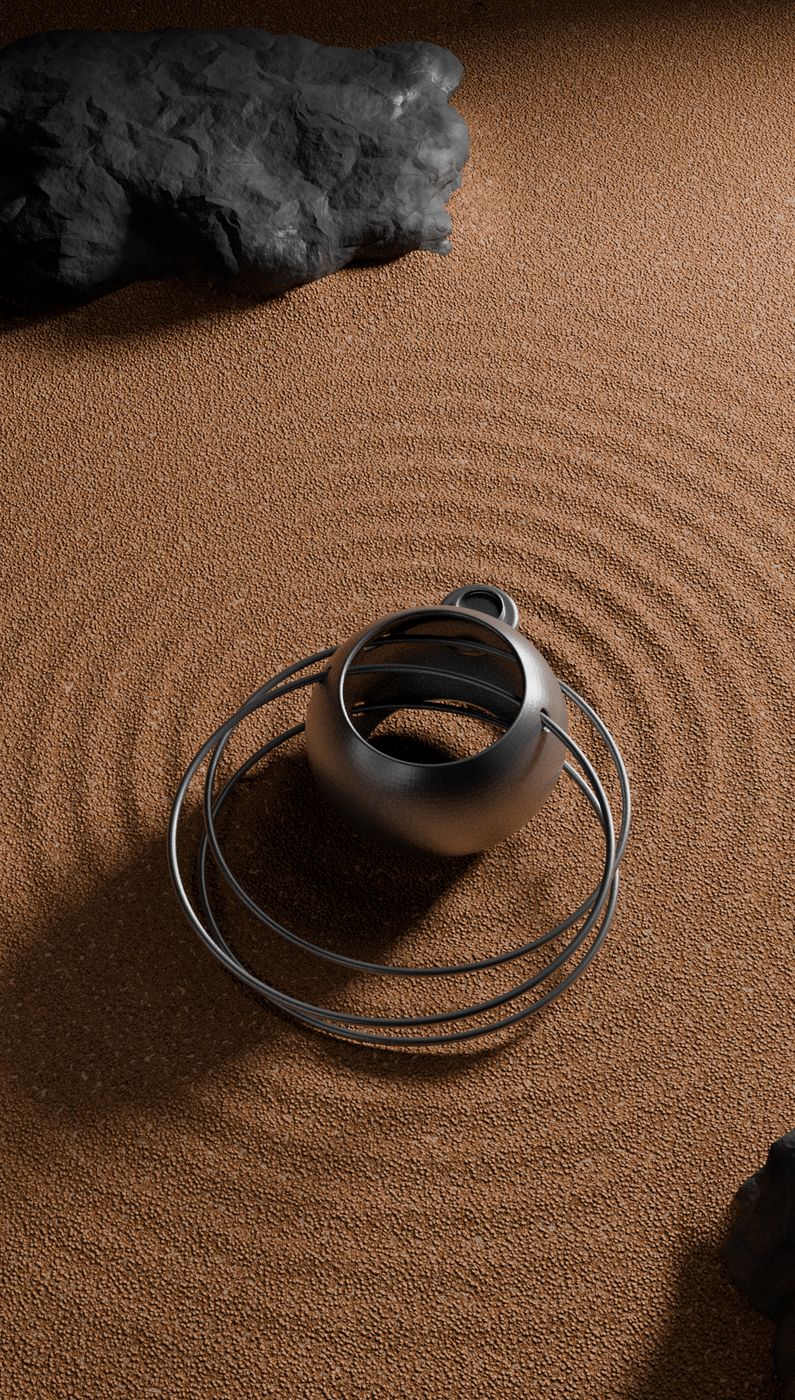
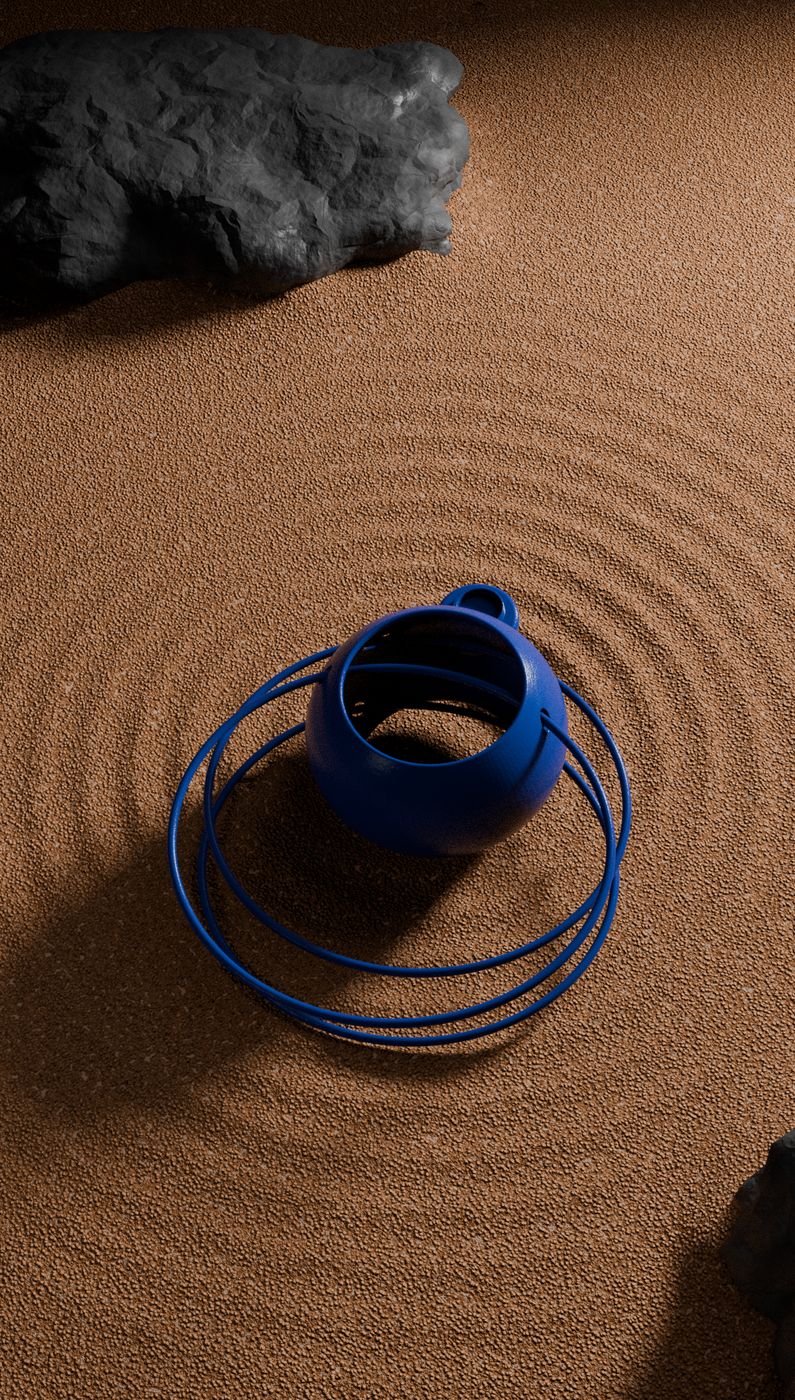
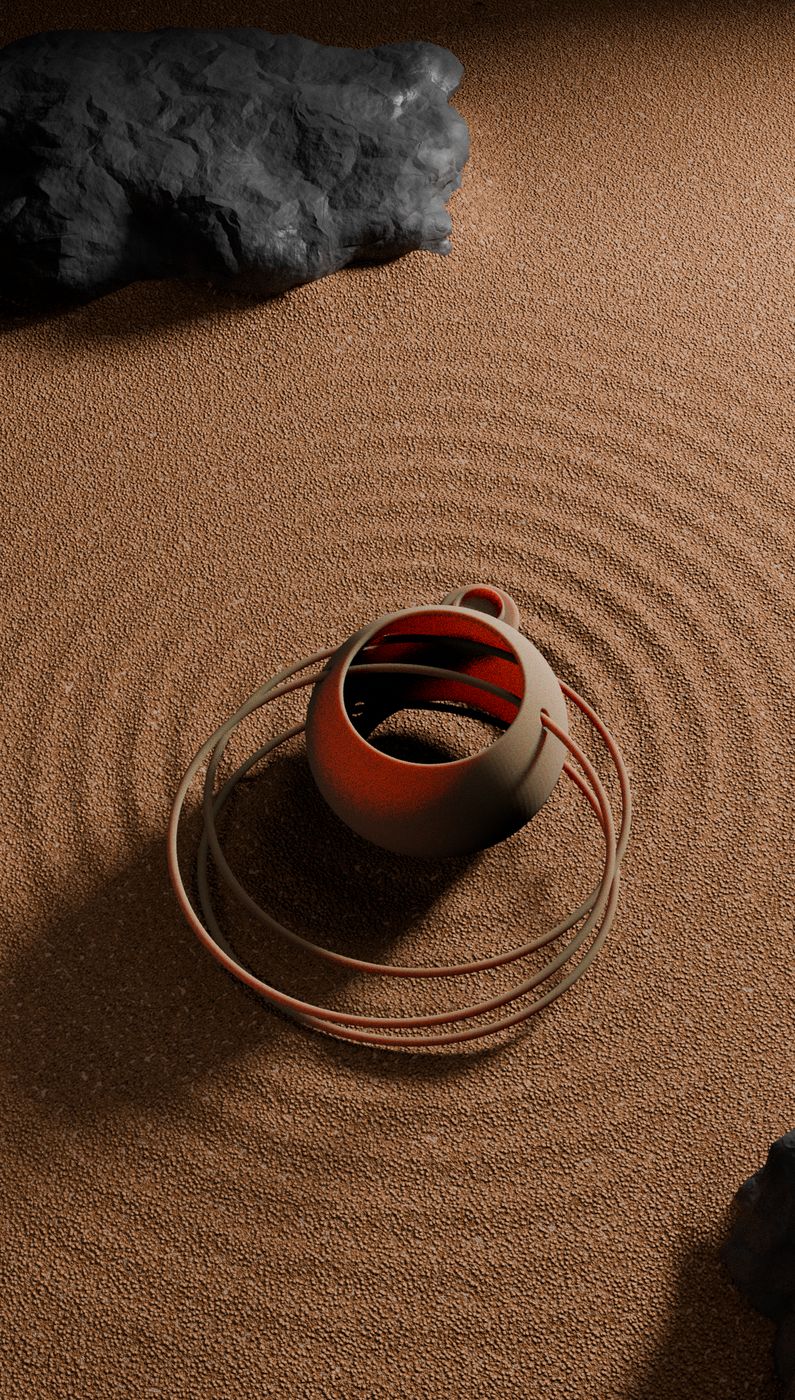
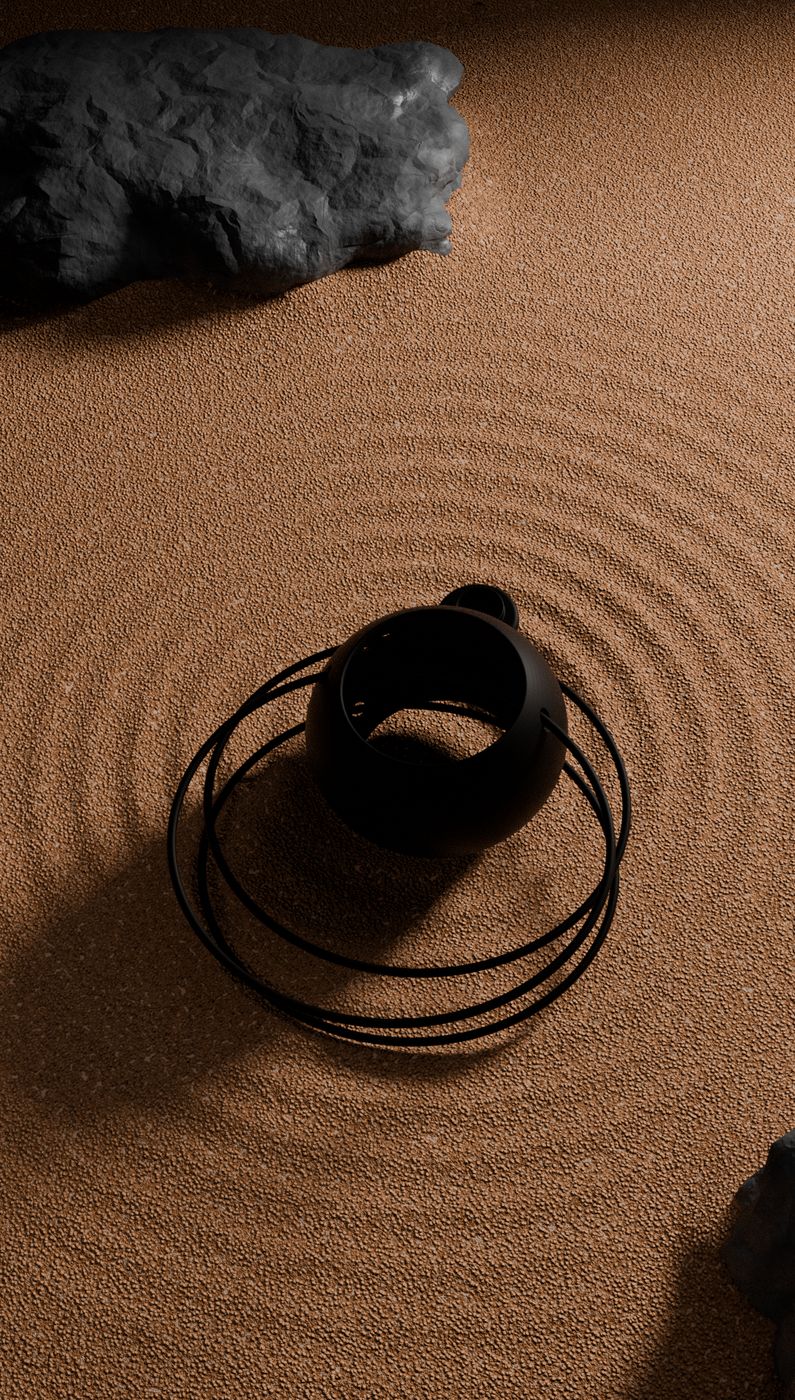
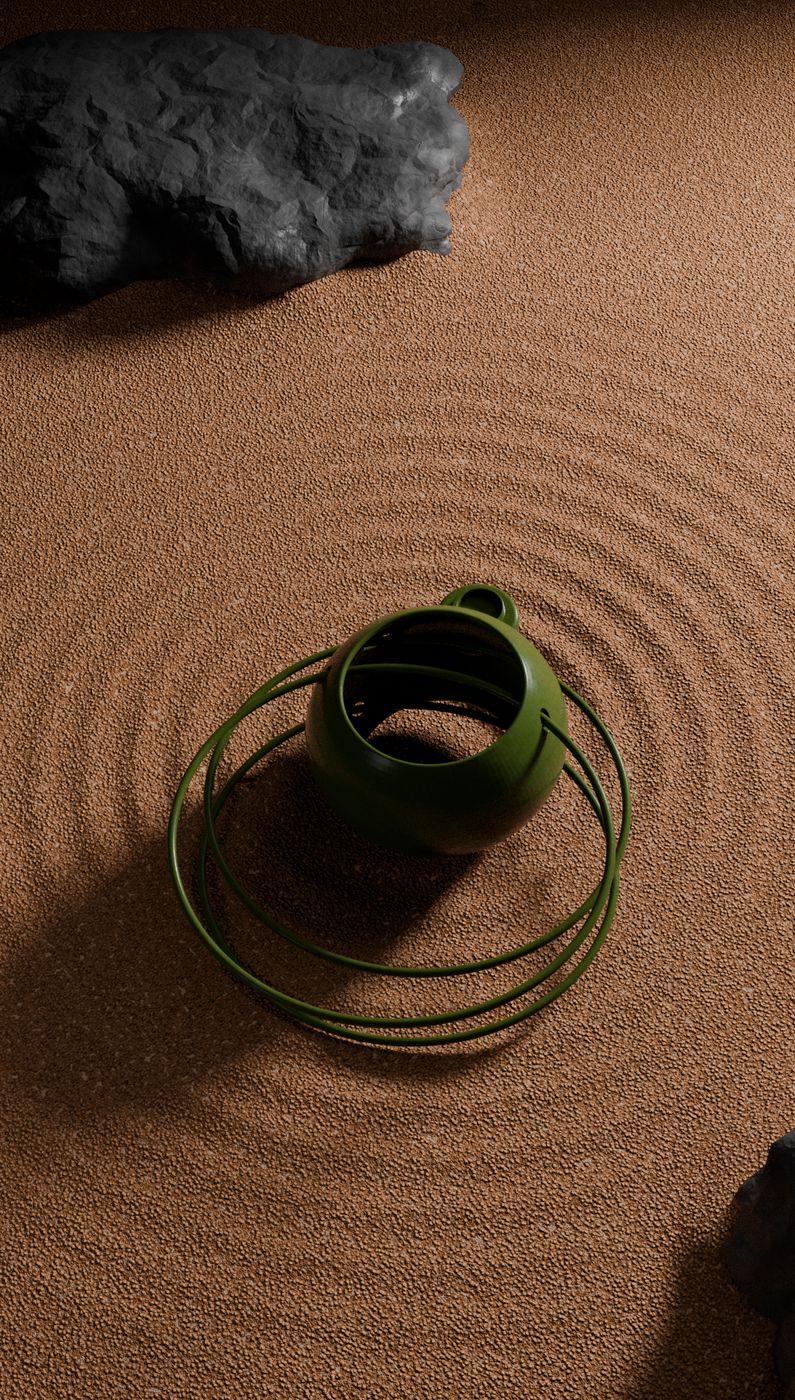
One file, five finishes.
Same model, same camera, same light. Only the material changes. This is what a collection looks like before a single sample is cut.
Lolita earrings. Black was produced. The other four were not.
No file? No problem.
Most independent brands do not have usable CAD. They have a piece and a few photographs. That is enough.
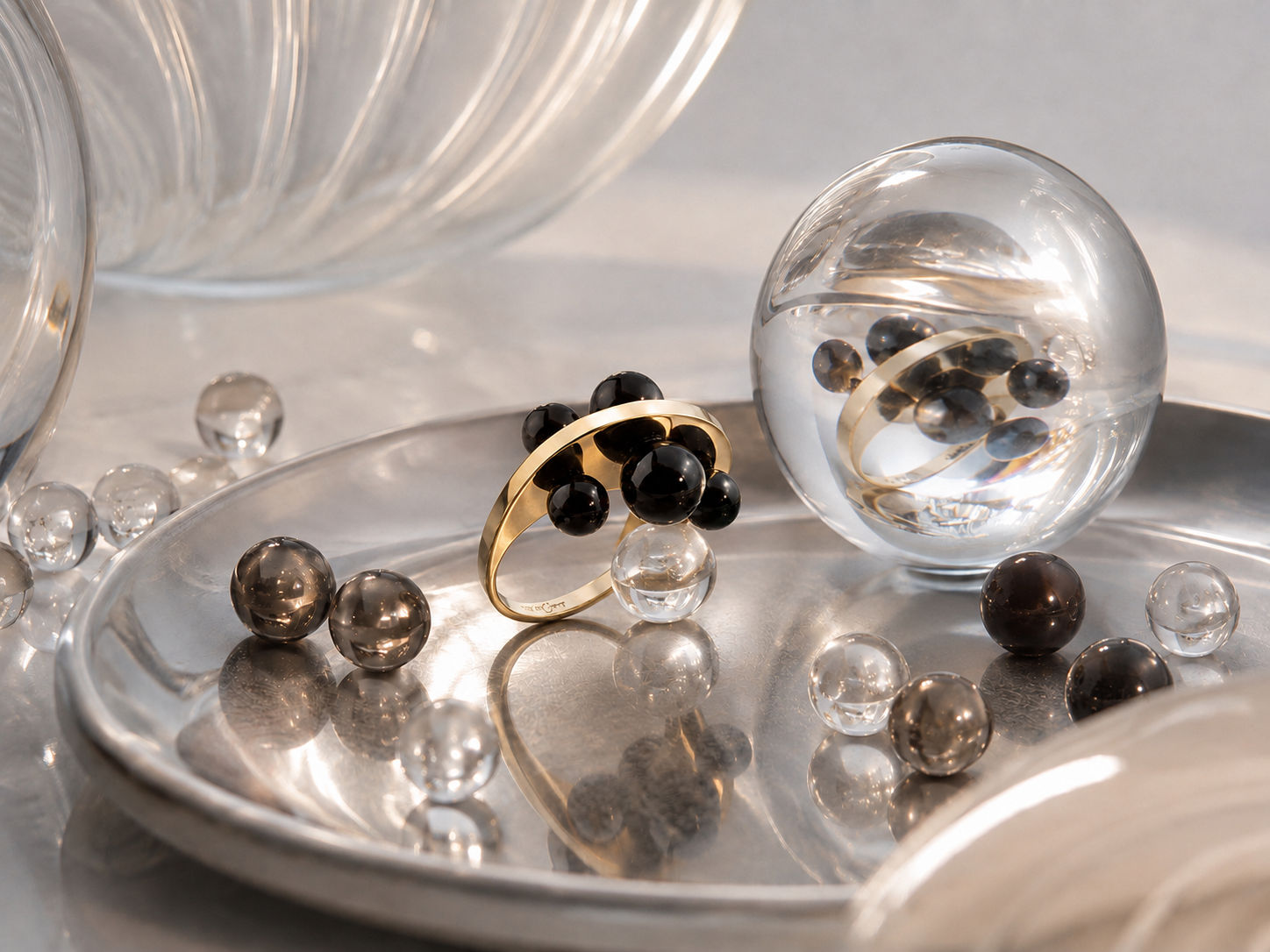
This ring existed only as a product shot. I modelled it from the maker’s images, then built the scene around it.
When not to model.
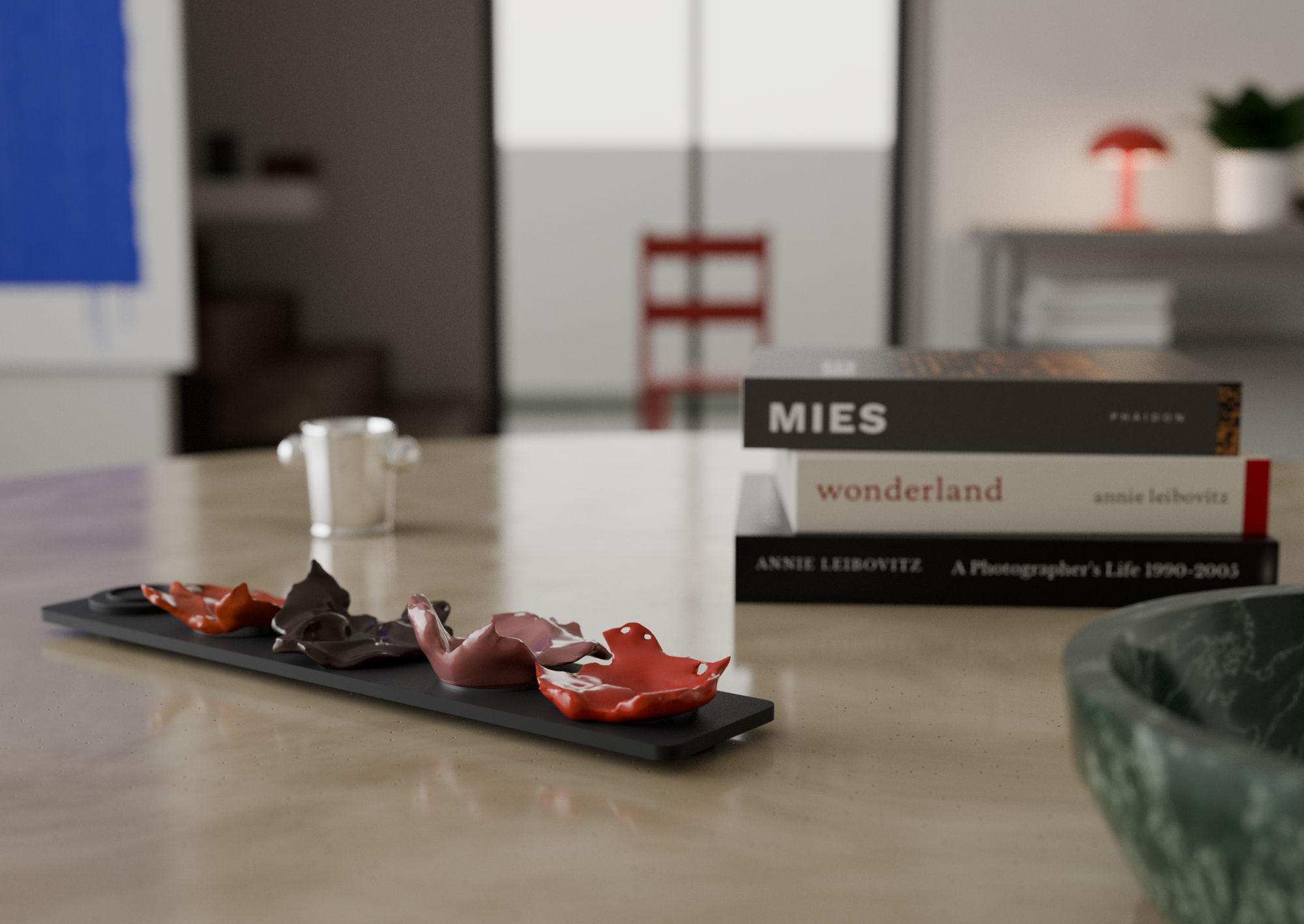
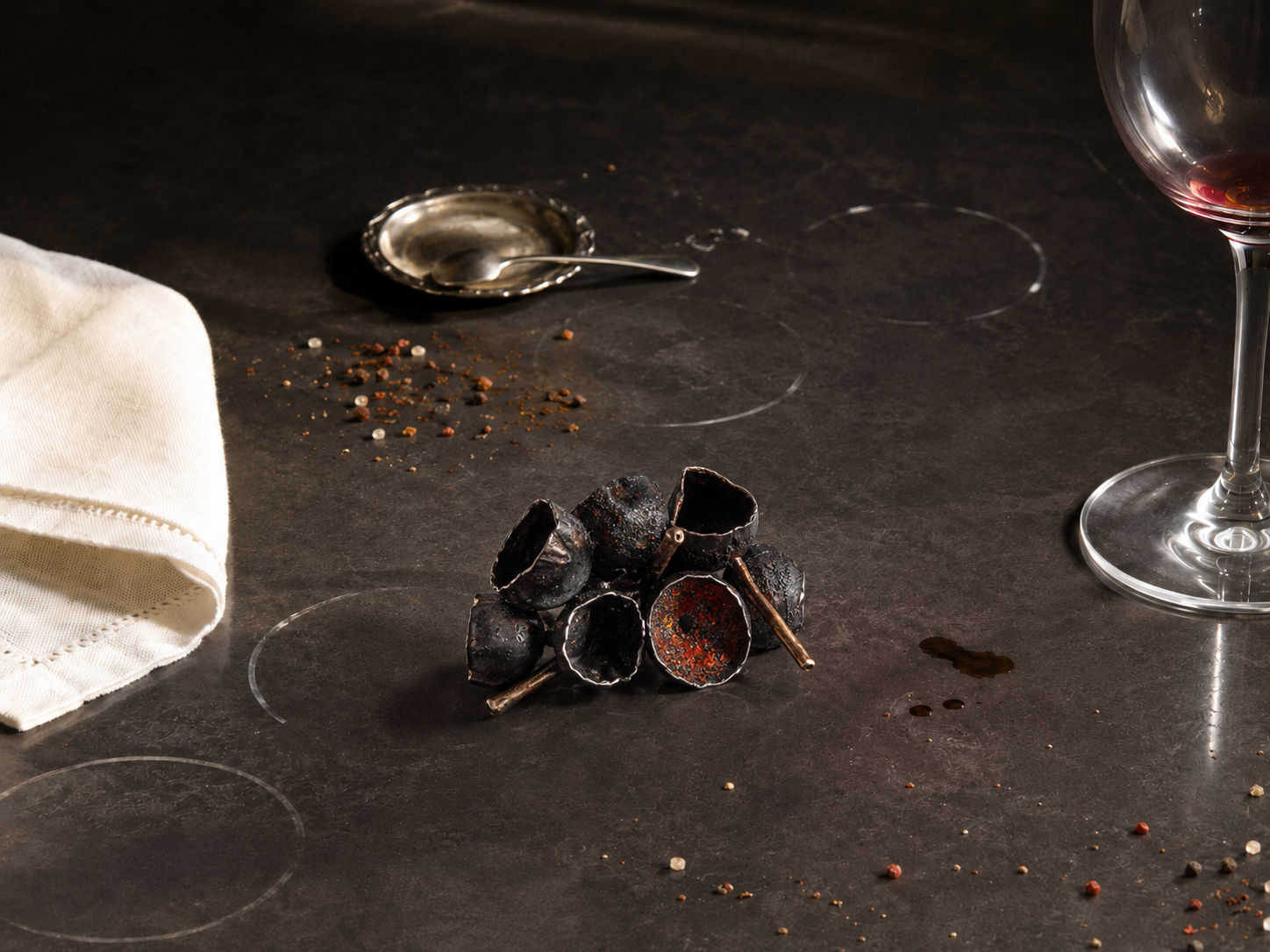
A hand-built piece is irregular by definition. Model it and you smooth it, and the smoothing is a lie about the object. So I build the world around the photograph instead.
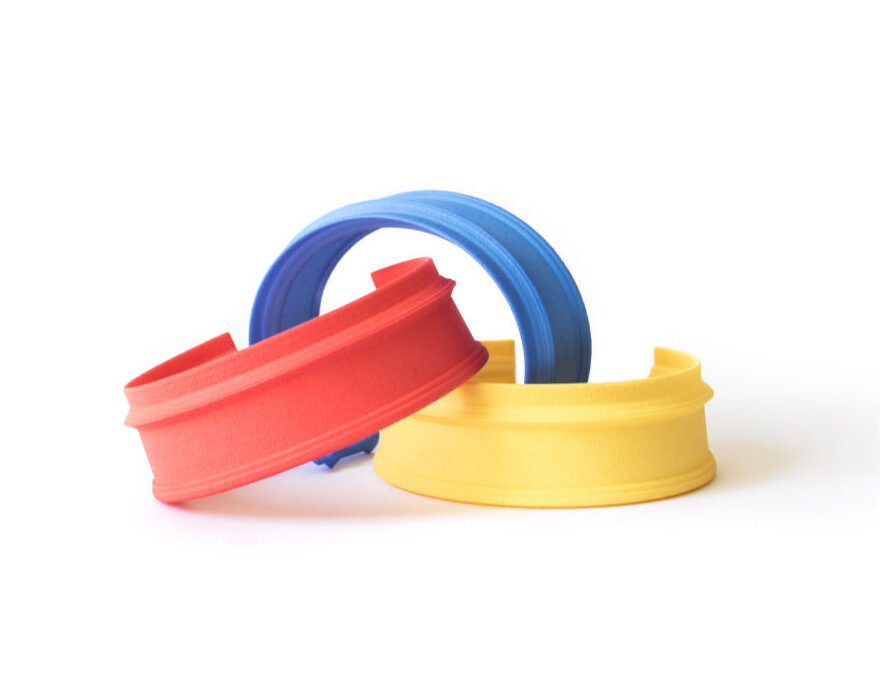
Things a camera cannot reach.
A bracelet at the scale of a building. No location, no permit, no crew, no travel.
Motion.
The gold was sprayed onto the physical ring. Nobody filmed it landing.
HOW IT WORKS
- What I need
A CAD file if you have one. If not, photographs of the piece from several angles, plus its dimensions. - What I do
Model or clean the geometry. Build the materials. Build the environment. Light it. - What you get
Layered files at print resolution. Web-sized versions. Any crop or aspect ratio you need for campaign, catalogue, e-commerce, or social. - How long
A single image in about a week. A five-image set in two to three weeks. Modelling from photographs adds time at the start. - Revisions
Two rounds on materials and lighting included. Geometry corrections at any point, because a wrong stone count is my error, not a revision.
Start here.
Send photographs or a file to sgnobahar@gmail.com and I will tell you what is possible and what it costs.
Based in Piemonte, Italy. Working internationally.
FAQ
Do I need a CAD file?
No. If you do not have a CAD file, I model the piece from photographs. Send images from several angles plus the dimensions. Most independent jewelry brands do not have usable 3D files, and this is the most common way projects start.
How much does jewelry rendering cost?
A five-image set starts at €1,000. A single image starts at €300. Motion is quoted separately and starts at €1,800. If the piece has to be modelled from photographs rather than an existing CAD file, that is €200 per piece on top. Complex stone settings and hand-made irregular pieces are quoted individually.
How long does it take?
A single image takes about a week. A five-image set takes two to three weeks. Modelling from photographs adds a few days at the start.
Will it look like my actual piece?
Yes, and this page shows the test. The match section places a photograph of a physical object next to a render of the same file, lit to the same measurements. Geometry corrections are made at any stage, because a wrong proportion or stone count is a modelling error rather than a change of direction.
Do I have to ship you the piece?
No. Nothing is shipped and nothing is insured in transit. Photographs and dimensions are enough to start, and everything after that happens as files.
Can you render finishes that do not exist yet?
Yes. That is the most common reason brands commission rendering. One model can be shown in any metal, plating, enamel, or stone before a sample is cut, which is what makes it cheaper than sampling a range to photograph it.
What file formats do you accept and deliver?
I accept STL, OBJ, 3DM, STEP, and photographs. I deliver files at print resolution plus web-sized versions in any crop or aspect ratio you need.
Do you do CGI for things other than jewelry?
Yes. Jewelry is most of the work, and the same approach applies to art objects, small design objects, ceramics, and glass. The common factor is scale and surface, not category.
Is this AI-generated imagery?
No. The pieces are modelled in 3D and rendered, not generated. Where an environment is AI-generated rather than built, the page says so under the image. The jewel itself is never generated.
Where are you based?
Piemonte, Italy. Clients are international and the entire process runs on files, so location does not affect the work.