Why your product photographs make your work look smaller than it is
Home/Notes/Why your product photographs make your work look smaller than it is
The objection comes first, because it is a good one.
Most maker photographs do not make the work look small. They make it look enormous. A twelve millimeter ring fills the frame like architecture, and then it arrives in a box, and the buyer holds something the size of a chickpea, and says nothing, and does not order again.
That is the same failure. The photograph gave the eye nothing to measure against, so the eye guessed. And the eye does not guess in millimeters. It guesses at what kind of object this is, who made it, and roughly what it should cost. All of that happens before anyone reads a caption.
So when I say smaller, I do not mean smaller in size. I mean smaller in consequence.
Three things in an image carry size. How much of the frame is in focus. How the light falls off across the surface. And what else is in the room. Standard product photography removes all three, and it removes them deliberately, because the conventions were written for catalogs where consistency mattered more than character.
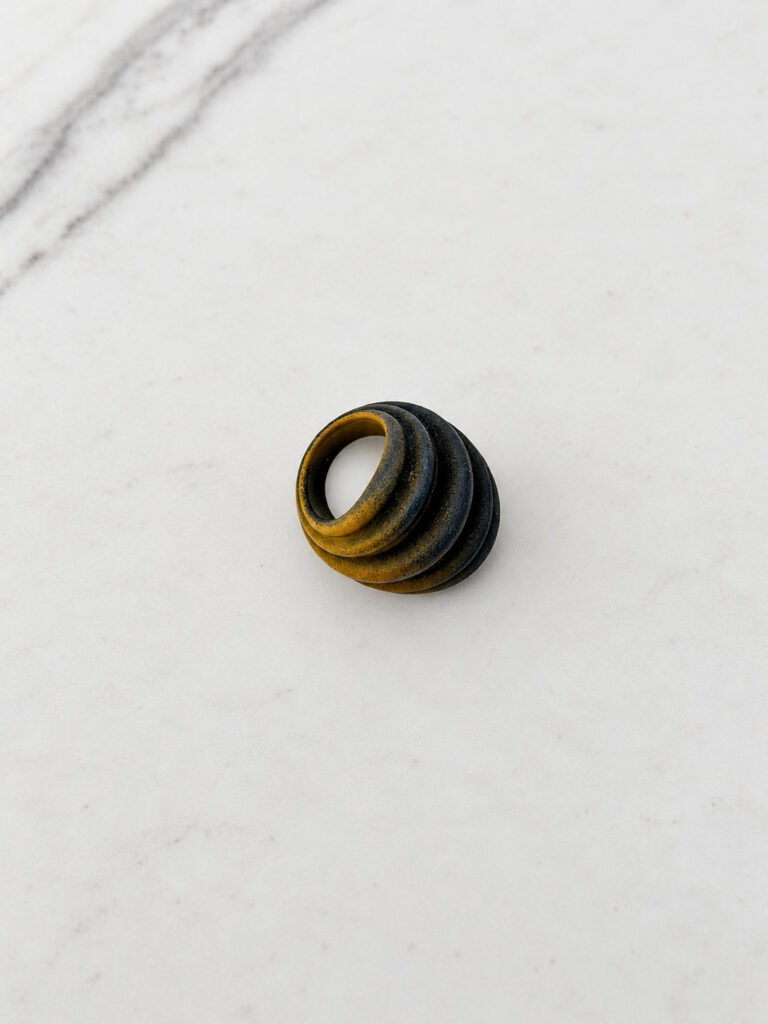
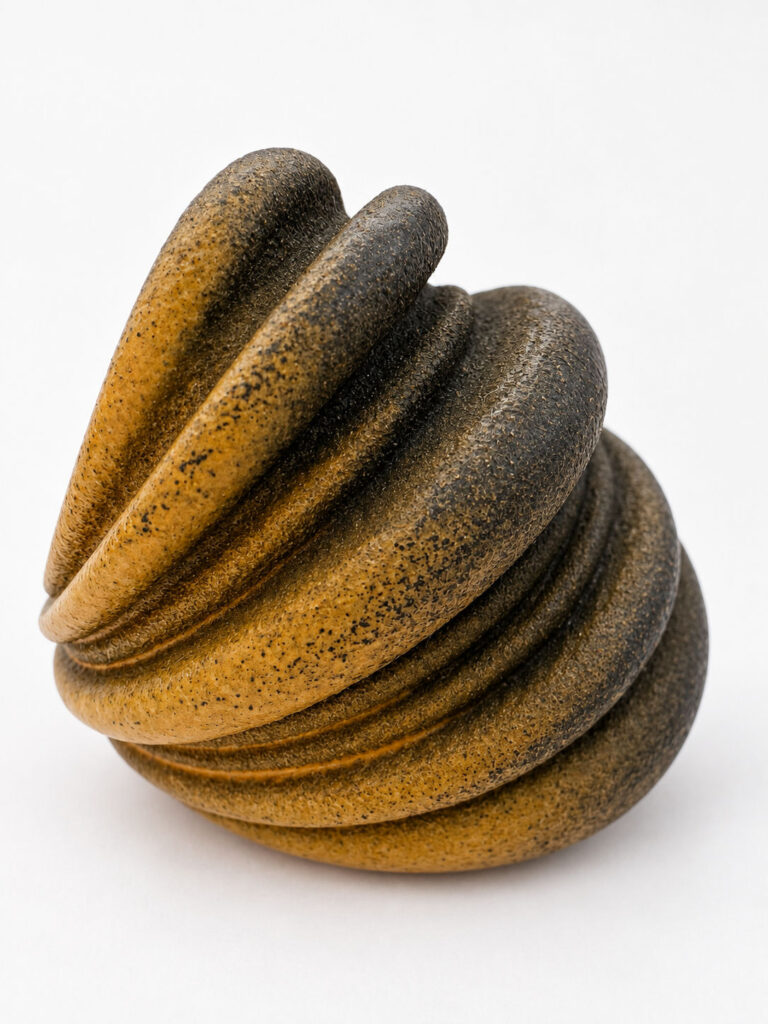
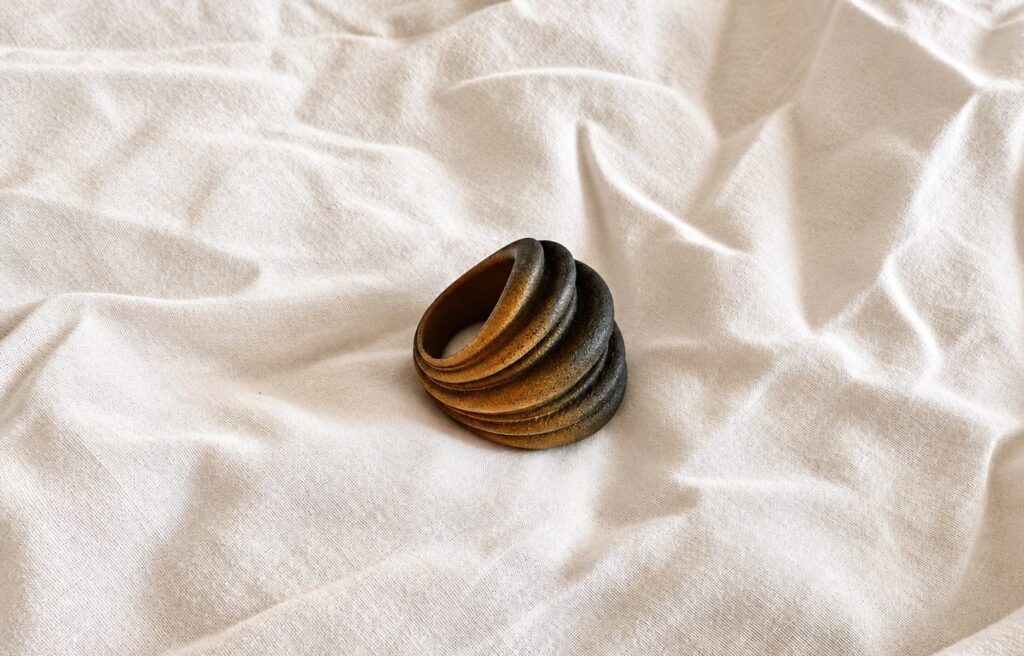
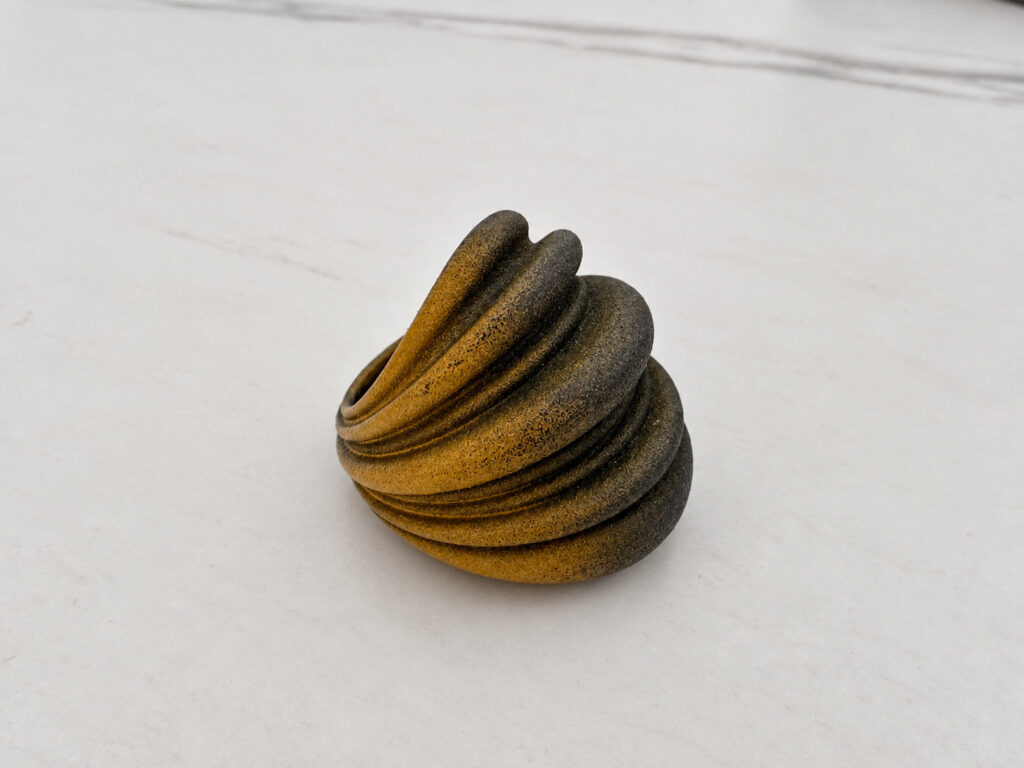
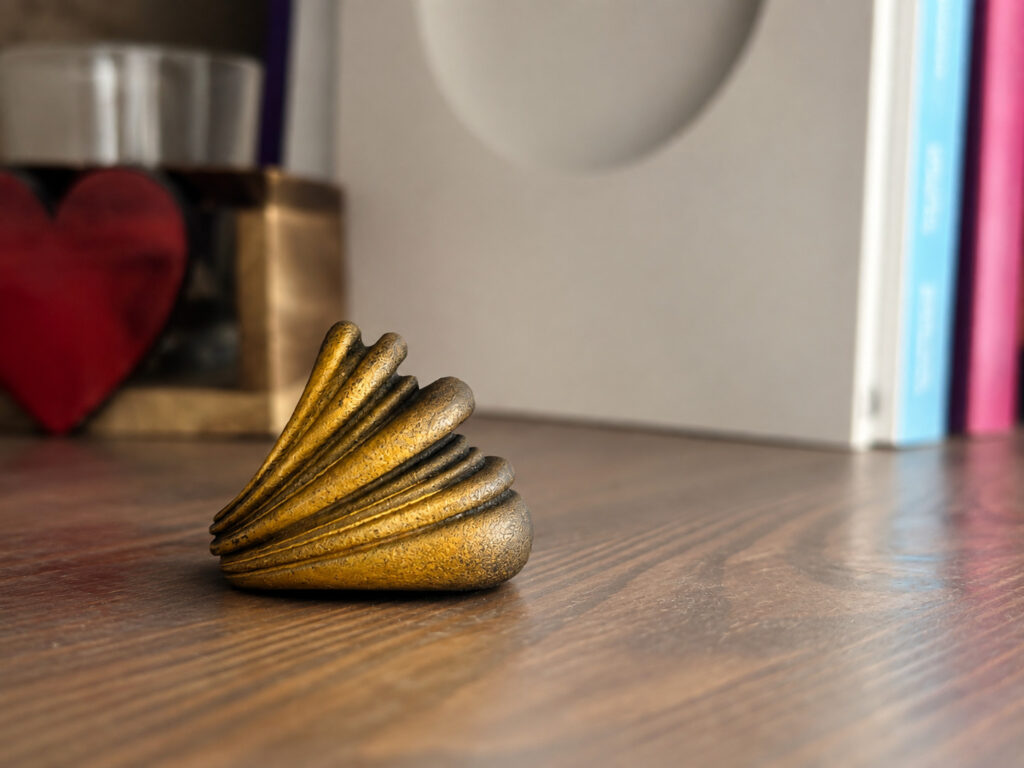
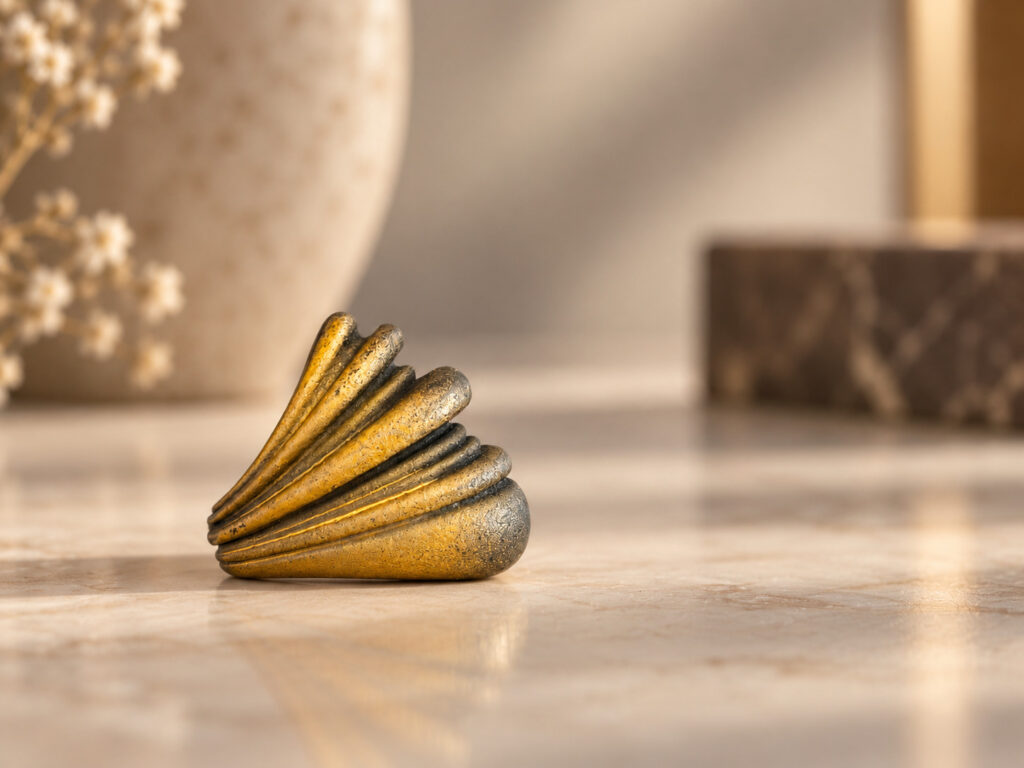
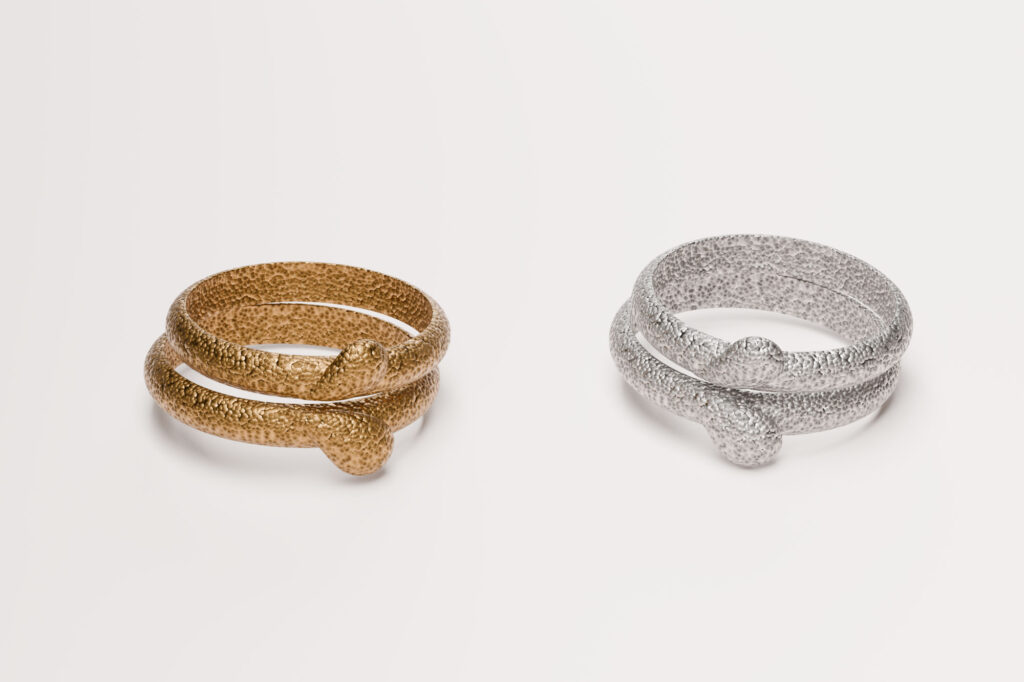
Every photograph here is the same ring. If the color looks different in each one, that is the light, and it is the first sign that none of these images is a neutral record of anything.
Why shallow focus makes your work look like a toy
Photographers make real cities look like scale models by faking a narrow band of focus. Tilt-shift. It works because focus depth is a size cue, and a reliable one. Your eye has almost no depth of field looking at something ten centimeters from your face, and plenty of it looking across a room. So an image with three millimeters of sharpness and everything else dissolving into softness says one thing before it says anything else. This is tiny, and it is very close.
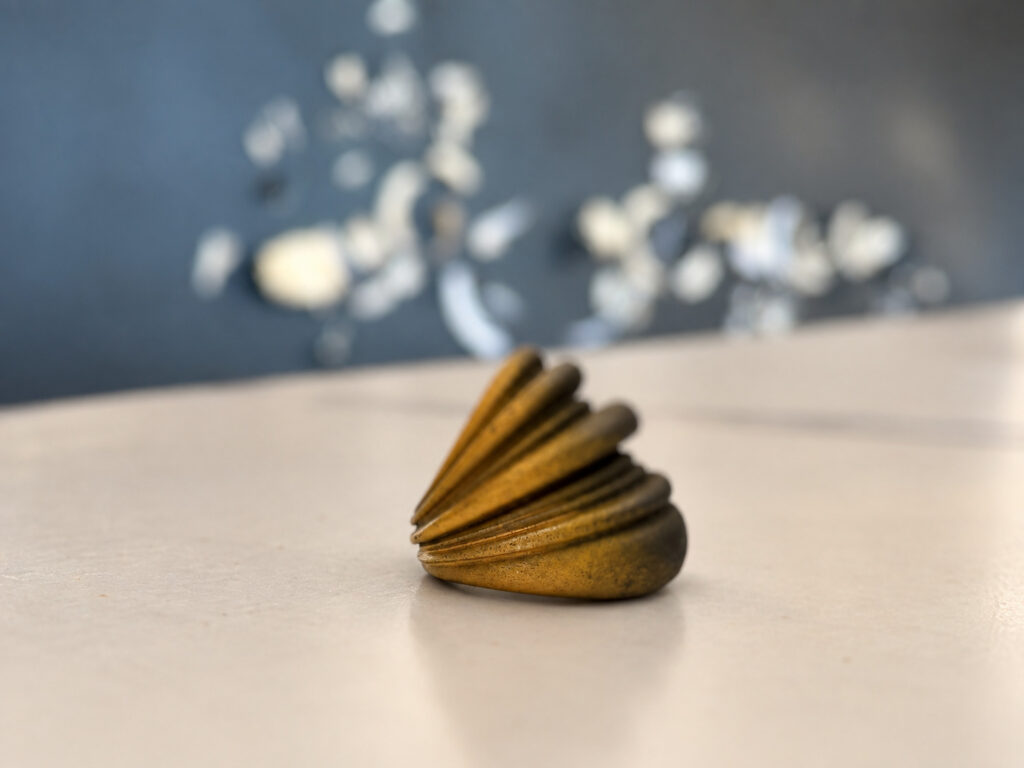
Macro lenses do this by default. Get close enough to fill the frame with a ring and at f/4 you have maybe two millimeters of usable focus. The band lands on one edge of the setting and the rest of the piece falls away into cream. You look at it and see beautiful bokeh. The viewer sees a miniature.
Two fixes, both boring, both free.
Stack it. Shoot eight or ten frames moving focus through the piece and combine them. Every serious macro image you have ever admired was probably made this way. Most editing software does it now without you thinking about it.
Or step back. Shoot at lower magnification and crop in afterward. Depth of field is governed by how large the object is on the sensor, not by how large it ends up on someone’s screen. You are trading pixels for depth, and with a current sensor you have pixels to trade.
he front ridges are sharp. The back of the ring is gone. Your eye reads that as very small and very close.
Light falls off, and that is how we read volume
Light gets weaker with distance, and it does it faster than people expect. Twice as far away is a quarter as bright.
On a large object you can see this happening. One side is brighter than the other, and the gradient between them is doing quiet work. It tells you the object has a near side and a far side. It tells you the object occupies space.
Now put a small piece under a big softbox. The source is enormous compared to the object and it is close to every part of it at once. The near edge and the far edge are effectively the same distance from the light. There is no gradient. The surface renders as one even value, and an even value has no volume, and no volume means no size.
This is why light tents flatten work. They were designed to remove shadow. Shadow was carrying the information.
The fix is smaller and closer. A source roughly the size of the piece, thirty centimeters away, produces a real gradient across a ring. Flag the other side with black card so the dark side stays dark. You want a difference between the two sides that you can see without squinting. And let the piece cast a shadow that has a direction and a length, because a shadow is a measurement.
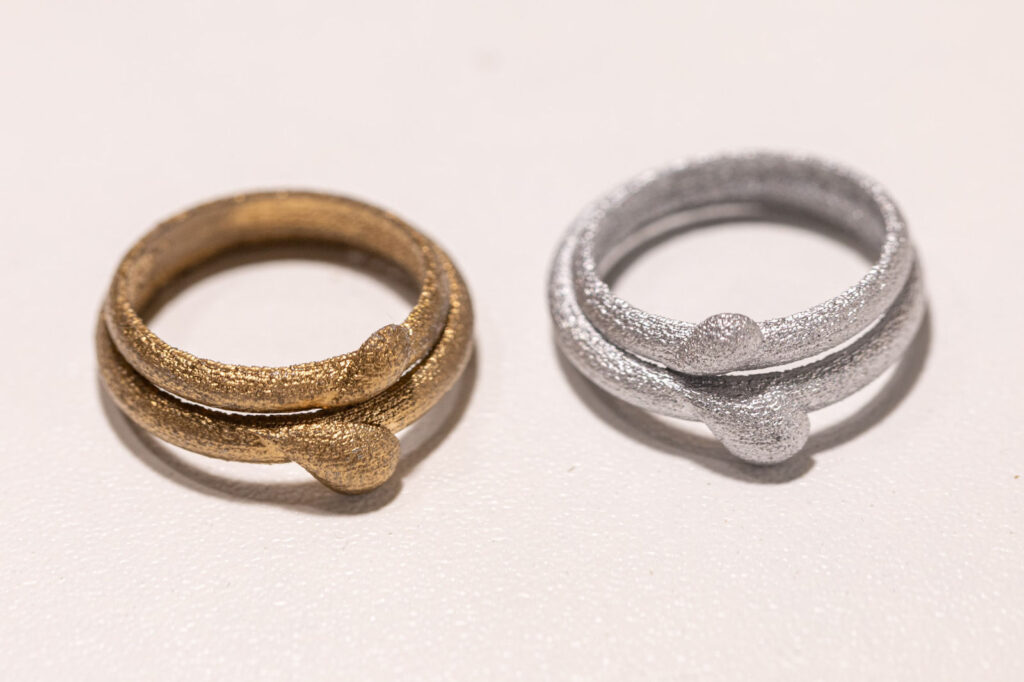
You cannot tell this is a ring.
A white background is not neutral
A white sweep feels like the safe choice.
Penombre ring, Nobahar Design.
Every object photographed on white is being compared by the viewer’s eye against every other object photographed on white, and most of those are marketplace listings sold at volume. You have put your work in that room. The viewer prices the room before pricing the object in it.
There is a mechanical problem underneath the cultural one. White paper has no texture, and texture is a ruler. Linen has a weave you know the size of. Sand has a grain. Wood has a grain. Concrete has aggregate. Put a piece on any of those and the eye has something to measure with. Put it on white and you have taken the ruler away and then asked the viewer to guess.
Raked sand and coarse linen keep turning up in this kind of work for a reason that has nothing to do with taste. Both have a known grain, and both take a shadow cleanly.
How do you show scale without putting a coin next to it
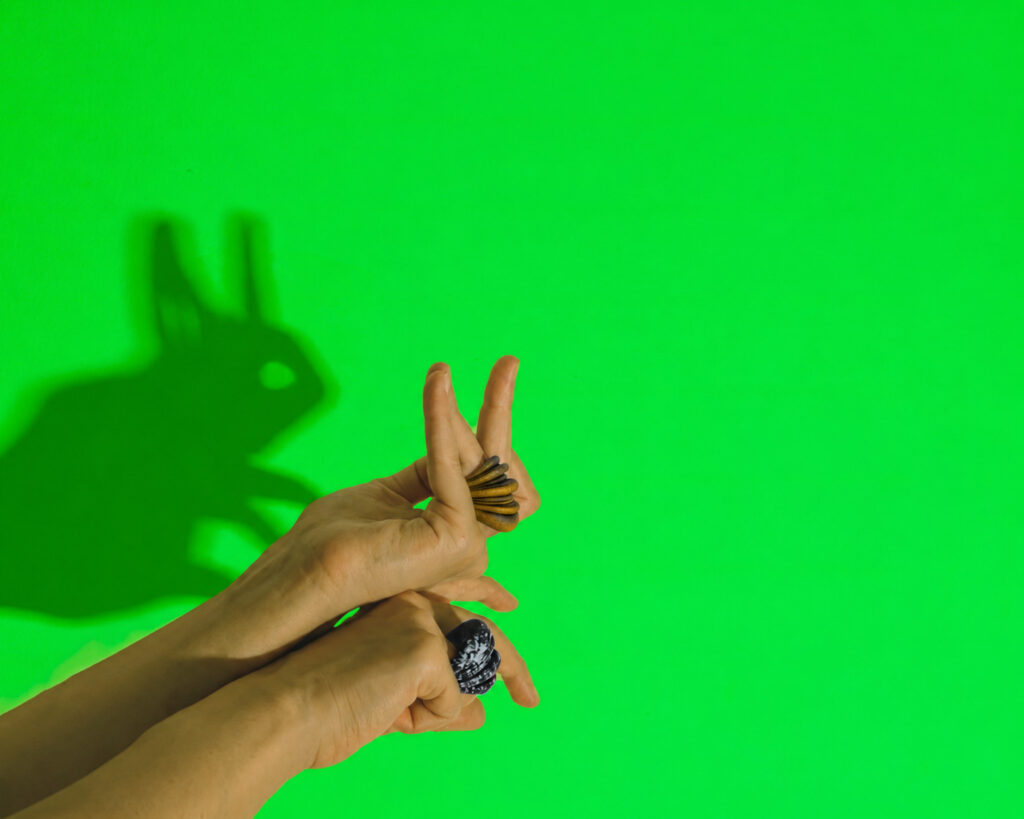
Worn is strongest.
A hand, an ear, a shoulder, a sleeve. The body is the only ruler everyone carries.
Shot for something else. It still answers the question the others do not.
If the piece cannot be worn in that shot, put one known object in the frame and let it stay quiet. A matchbox. A pencil. The corner of a book. Not a ruler and not a coin, both of which announce that you were anxious about it.
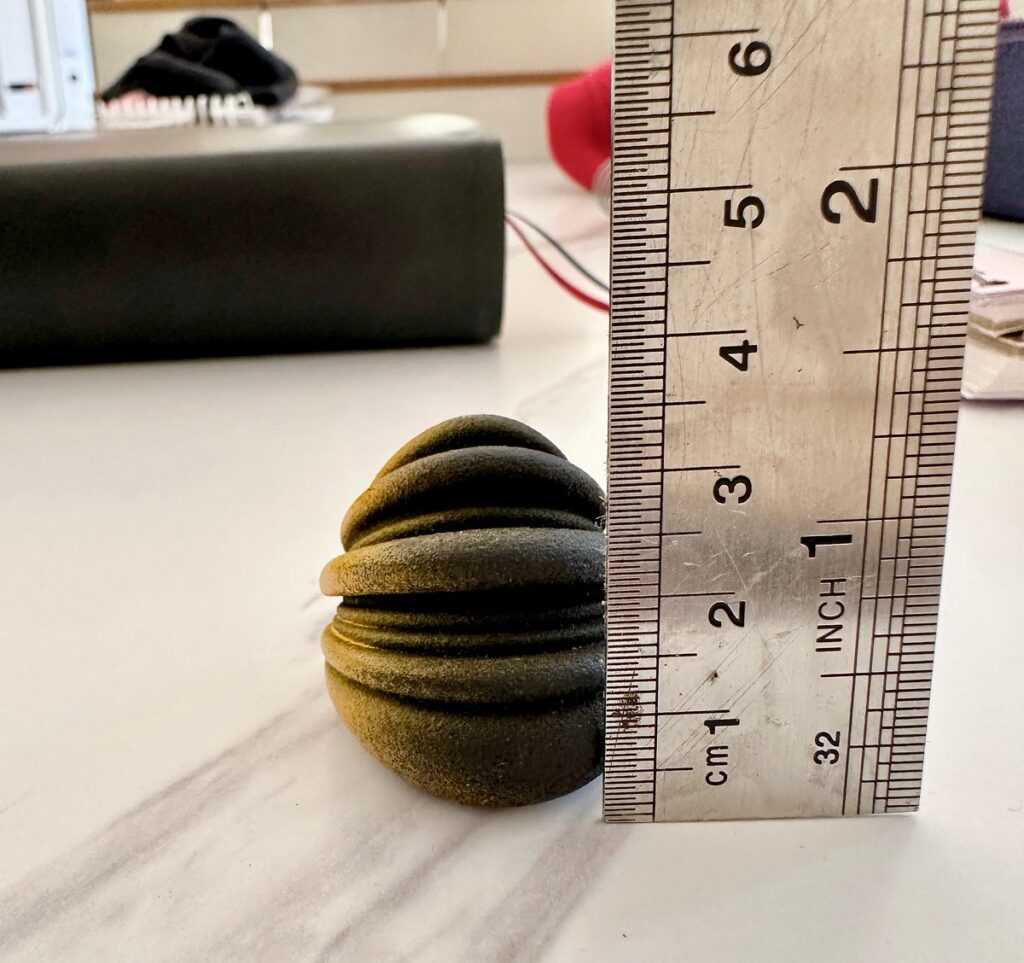
The ruler answers the question and takes the picture with it.
The third option is a room. Shoot the piece on a surface that continues out of frame, with a wall behind it and light arriving from a direction. Nobody consciously measures anything. They just stop guessing, and a viewer who has stopped guessing is a viewer who can look at the work.
Does a render solve this
Partly, and only if you know what you are asking it to do.
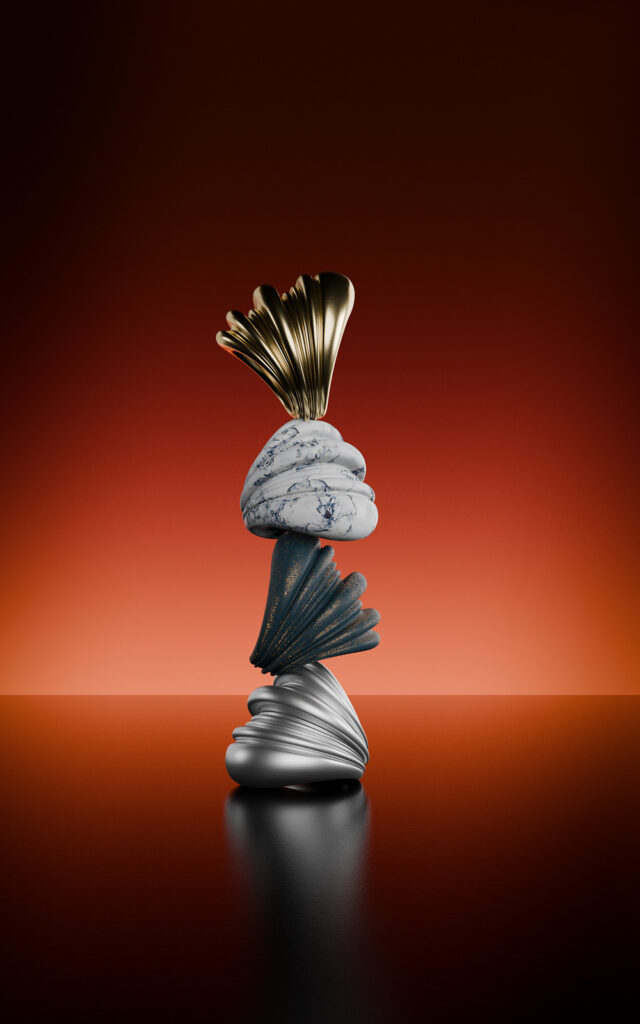
What changes in a file is that all three cues stop being constraints and become settings. Depth of field is a number rather than a physical limit of a lens at a working distance. Falloff can be set to what a light at that distance would actually do, or to what it should do. Scale is a value in the scene, so a piece can sit in a room built to its real dimensions and the relationship is correct by construction instead of by luck. And once the geometry exists as a file, five finishes cost five renders instead of five samples and five reshoots.
The ring is 3.5 centimeters across. The room was built around it.
What does not change is the thinking. A render with no scale cue is exactly as illegible as a photograph with no scale cue. There are thousands of rings floating in gray fog online that could be two centimeters across or two meters. Nothing was fixed, because the problem was never optical.
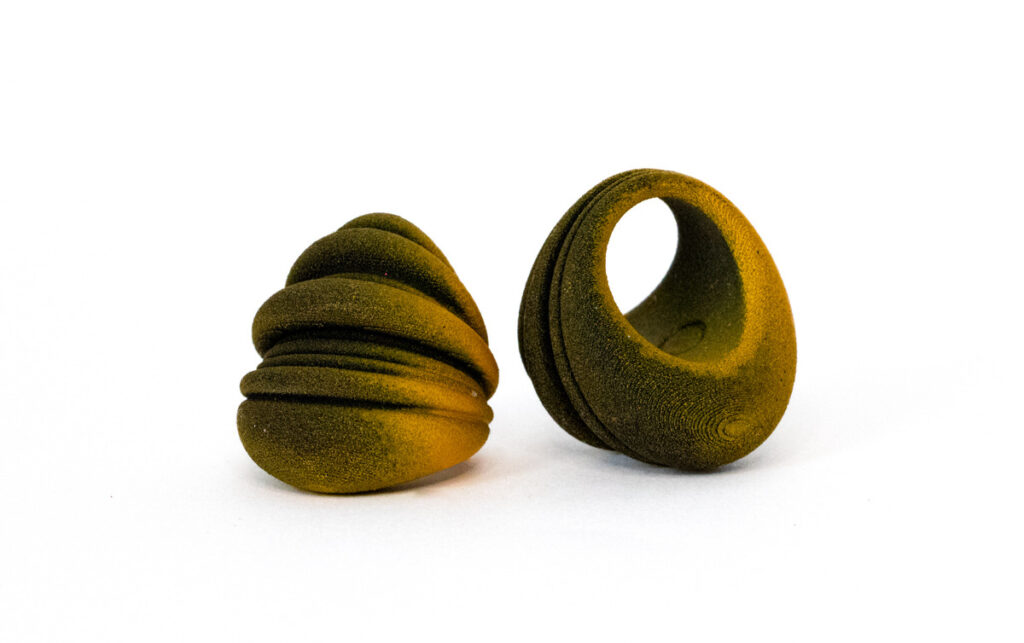
Also a render. Four finishes, one file. Four objects with no size at all. This could be three centimeters or three meters.
And there is one way a render can lie that a photograph mostly cannot. A material can be pushed until the surface looks better than the object actually is. That produces one good image, one disappointed buyer, and one return. It is why the first thing worth doing with any render is matching it to a reference photograph of the real piece under the same light. If the two do not agree, the render is not finished.
Fotografia
Render
The part that is actually in your control
Your work is almost certainly better than your photographs of it. Nearly everyone’s is. The gap is not talent and it is not equipment. It is that the standard way to photograph a small object strips out exactly the information a viewer needs in order to take it seriously.
Change one thing this week. Put a piece on a fabric with a visible weave. Light it from one side and let the shadow fall where it falls. Shoot it, then put the new image next to the old one.
You will not be looking at a better photograph. You will be looking at a bigger object.
The ring photographed throughout is from Nobahar Design‘s Penombre ring, 3.5 centimeters across.
I model jewelry and build the images around it, working from CAD files or from photographs. The match tests are on the CGI page.
FAQ
Why does my jewelry look small in photographs? Because most product photography removes the three cues the eye uses to judge size. Shallow focus, flat even light with no falloff, and a white background with no texture. Without those, the viewer stops reading size and starts reading category.
Why does shallow depth of field make objects look like miniatures? Your eye has very little depth of field at close range and a lot at distance. An image with a narrow band of focus tells the brain the subject is small and close before it registers anything else. Tilt-shift photography uses the same effect deliberately to make cities look like models.
Should I photograph jewelry on a white background? Only if the piece is going into a catalog that requires it. White has no texture, so it gives the eye nothing to measure against, and it visually files your work alongside every marketplace listing shot the same way. A surface with a known grain, such as linen, sand or wood, gives the viewer a ruler.
How do you show scale in a jewelry photograph without using a coin? Photograph it worn. The body is the only reference everyone carries. If that is not possible, include one ordinary object of known size, or shoot on a surface that continues out of the frame with a wall behind it and directional light.
Is a 3D render better than a photograph for jewelry? A render makes focus, falloff and scale into settings rather than physical limits, and lets one file produce multiple finishes without new samples. It does not fix the underlying decisions. A render with no scale cue is as illegible as a photograph with no scale cue, and a render that flatters the material past what the object does causes returns.